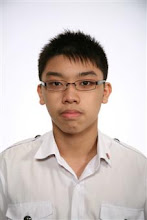
Well, as we come into the middle of term 3, the year is going to end soon and based on my MSG for the last 2 terms, I could be going the wrong way but there has been a new lease of life this term. For the several tests in Chinese and one test in Mathematics, I have gotten A1s and I do hope that run will continue. But I do ask myself: why was there this new change of results this term? Was it that I listened to the teachers’ “famous quotes” from Term 2 and this term? Many teachers have been telling me “Work Smart”, but I really do not know the true meaning of it but this task has allowed me to research on it:
http://www.dumblittleman.com/2010/06/working-hard-is-not-enough-heres-18.html
Let me concentrate on points that have more significance:
1.) Create a vision.
From the multiple platforms such as ePortfolio, it is now clearer to me what my vision/mission/aim or motto is, “Work Hard but Work Smart”. One day, I do hope that I will acquire the skills to work smart, thus, change now (words for myself).
2.) Learn from Others
I do have my own ways of revising when tests come but I do not achieve success at all times, it is time for me to look at the methods others use – creating your own notes? No, I am not a spatial learner and I do not want to waste time on creating the notes. Instead, I go through worksheets, find my mistakes and revise or even take the teacher’s handouts to read. But sometimes, those that always create their own notes always seem to get A1s… (sigh)
3.) If it works, stick to it
Sometimes, my method of revision does work but it is time for me to change but not at this stage, especially since my tests are in these 2 weeks (T3W7 & T3W8). Try that method another time, like a pre-test for examinations.
4.) Ask for help
I am one of those that prefer to do things myself and not disturb ourselves (it’s great work ethnic according to the website). But, sometimes, one doesn’t know that he may be going the wrong way. I haven’t been proactive in asking for help, so yet again, do change for the sake of myself (to stay in IP and hold on to the leadership positions)
5.) Stop when you are tired
At times, being hardworking all day may not reap your results and I do get tired at times. I do badly need rest sometimes. But at times, when I just want to finish the homework that needs to be handed up tomorrow, I do start to drink coffee and continue working.
Nevertheless, this blog post could be crucial to me in my future life because it has stated my belief. I do sincerely hope that this blog post could well bring change to me for the next term and excel in the EOYs. Maybe I have gone a little off-task here, with the blog post seeming like a dairy entry and being informal. Sorry about that.
Still – Good Luck for me and ALL and I do take pleasure in writing this meaningful blog post. I do hope to see the essays of my classmates and their beliefs and see what I can learn from there (Point 2.)
Thank You because now, I know the meaning and what to do next. Let this serve as inspiration to me.
Monday, August 8, 2011

Monday, July 18, 2011
Term 3 LA Blog Review
It’s time to look back at a term where I started my LA blog during the June Holidays:
1.) Book Review: Flowers for Algernon by Daniel Keyes
2.) Book Review: Never Let Me Go by Kazuo Ishiguro
3.) Book Review: A Wrinkle in Time by Madeleine L’Engle
4.) Elizabeth I & the Politics of the Elizabethan Era
5.) Religion: Jews vs. Christians
6.) Customs & Lifestyle
7.) Truth of Mississippi Burning
8.) The Historical and Cultural Setting of Venice
9.) Shakespeare’s Theatre
10.) Can the Real William Shakespeare Please Stand Up?
11.) Being a Gentleman
12.) Term 3 Comment 1
13.) Term 3 Comment 2
14.) Term 3 Comment 3
15.) Term 3 Comment 4
16.) Term 3 Comment 5
17.) Term 3 Comment 6
18.) Term 3 Comment 7
19.) Term 3 Comment 8
20.) Term 3 Comment 9
21.) Term 3 Comment 10
22.) Arts, having
23.) Shakespeare’s Language & Our Language
24.) Term 3 LA Blog Review
Kudos! It has been yet another term of blogging for Language done it for two years, indefinitely everyone’s blogging skills have improved. Blogging this term has been a source for me to vent my frustration on, because it just soothes one’s mind since it is quick, fast and easy. If not for LA ACE, I really do wonder how many of us will bother to update our blog but today (18th July 2011) could well be my last ever blog post for this year (since I want to get my ACE done quickly such as to concentrate on academics for the rest of the term). Indeed, I have enjoyed this blogging experience of mine and in the hope of next year; I hope it will happen again.
1.) Book Review: Flowers for Algernon by Daniel Keyes
2.) Book Review: Never Let Me Go by Kazuo Ishiguro
3.) Book Review: A Wrinkle in Time by Madeleine L’Engle
4.) Elizabeth I & the Politics of the Elizabethan Era
5.) Religion: Jews vs. Christians
6.) Customs & Lifestyle
7.) Truth of Mississippi Burning
8.) The Historical and Cultural Setting of Venice
9.) Shakespeare’s Theatre
10.) Can the Real William Shakespeare Please Stand Up?
11.) Being a Gentleman
12.) Term 3 Comment 1
13.) Term 3 Comment 2
14.) Term 3 Comment 3
15.) Term 3 Comment 4
16.) Term 3 Comment 5
17.) Term 3 Comment 6
18.) Term 3 Comment 7
19.) Term 3 Comment 8
20.) Term 3 Comment 9
21.) Term 3 Comment 10
22.) Arts, having
23.) Shakespeare’s Language & Our Language
24.) Term 3 LA Blog Review
Kudos! It has been yet another term of blogging for Language done it for two years, indefinitely everyone’s blogging skills have improved. Blogging this term has been a source for me to vent my frustration on, because it just soothes one’s mind since it is quick, fast and easy. If not for LA ACE, I really do wonder how many of us will bother to update our blog but today (18th July 2011) could well be my last ever blog post for this year (since I want to get my ACE done quickly such as to concentrate on academics for the rest of the term). Indeed, I have enjoyed this blogging experience of mine and in the hope of next year; I hope it will happen again.
Shakespeare’s Language & Our Language
Blog Prompt: Now that you understand how the English Language evolved, share with us some words into which you have gained new insights (about their origin, their form, etc.)In what ways is Elizabethan English different from the English we use today? Discuss some new terms and grammars that exist in the various Englishes in the world today.
English today is such an important language to all people worldwide and it is not only about new words. While English in the past was vastly different from what we have today, I personally feel that the words today sound much nicer than before. Would you rather say the word “hath” than “have”? It sounds weird to us because we are accustomed to the language today. However, the last two websites/articles have brought out the importance of the English Language today. Today, English is seen as the official and worldwide language to be used everywhere. However, the different English has also resulted in some negatives, such as the construction of profanities or phrases. Nevertheless, Shakespeare’s Language most likely played a crucial role in deciding the language we have today, according to research done, 3000 words from Shakespeare’s language influenced words or were added into the dictionary we have today. Wherever we go, we would hear English. In our normal lives in our school, aren’t the majority of the lessons in English? Even when we converse with our classmates, how many of us converse in different languages such as Chinese? English has been an important tool to all, being recognised as the official language, everyone will need to “at least” have some knowledge of it. Examples include businesses within two different countries, where they use English to converse, besides, what happens when there is an emergency signal? Are you going to give it in all 4 languages (based on Singapore) or only spread the message in English? In one of the articles, a student’s Greek friend who heard of the London Bombings immediately called the student to alight the bus and a minute later, the bus was truly a target of bomb explosions, which had saved his life. The language they used to converse despite having 2 different nationalities: English. Look ahead in the future: Would there be any changes to the English language? What would happen in the future? Would there be new words added to the dictionary?
English today is such an important language to all people worldwide and it is not only about new words. While English in the past was vastly different from what we have today, I personally feel that the words today sound much nicer than before. Would you rather say the word “hath” than “have”? It sounds weird to us because we are accustomed to the language today. However, the last two websites/articles have brought out the importance of the English Language today. Today, English is seen as the official and worldwide language to be used everywhere. However, the different English has also resulted in some negatives, such as the construction of profanities or phrases. Nevertheless, Shakespeare’s Language most likely played a crucial role in deciding the language we have today, according to research done, 3000 words from Shakespeare’s language influenced words or were added into the dictionary we have today. Wherever we go, we would hear English. In our normal lives in our school, aren’t the majority of the lessons in English? Even when we converse with our classmates, how many of us converse in different languages such as Chinese? English has been an important tool to all, being recognised as the official language, everyone will need to “at least” have some knowledge of it. Examples include businesses within two different countries, where they use English to converse, besides, what happens when there is an emergency signal? Are you going to give it in all 4 languages (based on Singapore) or only spread the message in English? In one of the articles, a student’s Greek friend who heard of the London Bombings immediately called the student to alight the bus and a minute later, the bus was truly a target of bomb explosions, which had saved his life. The language they used to converse despite having 2 different nationalities: English. Look ahead in the future: Would there be any changes to the English language? What would happen in the future? Would there be new words added to the dictionary?
Term 3 Comment 10
This comment is based on Yi Da’s blog post entitled “People over Penny (Dr Susan Lim Case).”
Indeed, many people will share the same opinions with you since it is a huge amount of money and doctors should be benevolent, and charge their patients accordingly, regardless of social standing or any other categories. However, there is no evidence to back up the fact that she had overcharged her patient, maybe indeed the cost of the treatment was this high. Besides, doctors do have a heart, but we always need to make known of our intentions. These days, it is a very materialistic world, where money is important to all of us; don’t you hear your parents wanting you to study hard, such that in the future, you will hold high-paid jobs such as lawyers and doctors? So, think: Is it benevolence or money you want when you’re a doctor?
Indeed, many people will share the same opinions with you since it is a huge amount of money and doctors should be benevolent, and charge their patients accordingly, regardless of social standing or any other categories. However, there is no evidence to back up the fact that she had overcharged her patient, maybe indeed the cost of the treatment was this high. Besides, doctors do have a heart, but we always need to make known of our intentions. These days, it is a very materialistic world, where money is important to all of us; don’t you hear your parents wanting you to study hard, such that in the future, you will hold high-paid jobs such as lawyers and doctors? So, think: Is it benevolence or money you want when you’re a doctor?
Term 3 Comment 9
This comment is based on Tian-Le’s blog post entitled “Adolescent Delinquency.”
A meaningful and well-chosen topic for your blog post since some of us could be stuck in this situation currently now. To start, you have given your audience a great in-depth report, which is inclusive of research done on the Internet as well as voicing your own opinions with regards to this highly debatable issue. It is also a very informal way to approach the audience, which could trigger response from the public, especially parents and parents-to-be, whom may want to change their views with regards to this by changing their lifestyle to spend more valuable time with their children. On a brighter side, let’s wish and hope that none of us will ever be caught in this situation and for those that have been caught in it, it is time for you to take action because you are the only one that can help yourself and bring about change for the better.
A meaningful and well-chosen topic for your blog post since some of us could be stuck in this situation currently now. To start, you have given your audience a great in-depth report, which is inclusive of research done on the Internet as well as voicing your own opinions with regards to this highly debatable issue. It is also a very informal way to approach the audience, which could trigger response from the public, especially parents and parents-to-be, whom may want to change their views with regards to this by changing their lifestyle to spend more valuable time with their children. On a brighter side, let’s wish and hope that none of us will ever be caught in this situation and for those that have been caught in it, it is time for you to take action because you are the only one that can help yourself and bring about change for the better.
Term 3 Comment 8
This comment is based on Wei Yang’s blog post entitled “The Upcoming Project’s Day Semi-Finals.”.
I personally feel that this topic could be inappropriate for a blog post that will be read by students and teachers from Hwa Chong. For everything you write in your blog, you should have a purpose and based on the content, your purpose is to let the audience know more about Hwa Chong’s Projects Day Competition, but the audience are people that are aware of it already and at the end of the day, you have failed in your motive to telling others more. Although I believe that this blog post could serve as valuable knowledge to others (students/teachers not from Hwa Chong), you should have added on by giving your opinions on why is there such an event organised or what are the purposes/aims/objectives of holding this competition.
I personally feel that this topic could be inappropriate for a blog post that will be read by students and teachers from Hwa Chong. For everything you write in your blog, you should have a purpose and based on the content, your purpose is to let the audience know more about Hwa Chong’s Projects Day Competition, but the audience are people that are aware of it already and at the end of the day, you have failed in your motive to telling others more. Although I believe that this blog post could serve as valuable knowledge to others (students/teachers not from Hwa Chong), you should have added on by giving your opinions on why is there such an event organised or what are the purposes/aims/objectives of holding this competition.
Term 3 Comment 7
This comment is based on Jonathan’s blog post entitled “Book Review- Jeffrey Archer’s Not a Penny More, Not a Penny Less.”.
I am not trying to be critical here but personally, I feel that a book review is not supposed to be done in this way. A book review is different from a book summary. A book review is supposed to contain an in-depth review of the book such as the themes of the story. Besides, it should contain basic information such as details of publisher, most importantly, concentrate on the themes and try to relate it to real-life examples, at the same time, giving your comments, experiences and feelings after having read the book. However, your book summary has been excellent, covering the important characters in the story as well as giving the audience quick, brief but yet crucial details in the plot.
I am not trying to be critical here but personally, I feel that a book review is not supposed to be done in this way. A book review is different from a book summary. A book review is supposed to contain an in-depth review of the book such as the themes of the story. Besides, it should contain basic information such as details of publisher, most importantly, concentrate on the themes and try to relate it to real-life examples, at the same time, giving your comments, experiences and feelings after having read the book. However, your book summary has been excellent, covering the important characters in the story as well as giving the audience quick, brief but yet crucial details in the plot.
Sunday, July 17, 2011
Term 3 Comment 6
This comment is based on Clarence’s blog post entitled “Russian Ship Capsize”.
Good job in telling all about the current affairs in today’s world. I do definitely agree with you that money should not be saved at the expense of the lives of the people. From this and based on your character, you are one that likes to create or construct new stuff, especially since you are in CCA Robotics. However, maybe you could have added more information about how ships are built such that we could have gained in-depth knowledge about why the ship capsized, which will mean looking at the heavier side of events, in this case being the scientific part. Besides, maybe you could share your experience on a ship if you have sat one before in order to enhance a real visual imagery for your readers.
Good job in telling all about the current affairs in today’s world. I do definitely agree with you that money should not be saved at the expense of the lives of the people. From this and based on your character, you are one that likes to create or construct new stuff, especially since you are in CCA Robotics. However, maybe you could have added more information about how ships are built such that we could have gained in-depth knowledge about why the ship capsized, which will mean looking at the heavier side of events, in this case being the scientific part. Besides, maybe you could share your experience on a ship if you have sat one before in order to enhance a real visual imagery for your readers.
Term 3 Comment 5
This comment is based on Wei Ren’s blog post entitled “Holiday Reading (Book Review-Fortune’s Folly)”.
It’s great having students from our class to introduce good books to us but I would have felt that this book would not interest many people in our class since it is fantasy-based and I believe that minority of the people go for fantasy-based stories, instead we love adventure and science-fiction based stories. Besides, based on my experiences of reading a fantasy based book, it has no relation to our curriculum and the main purpose is for entertainment, which is something we are not looking for. Maybe you could have pointed out the themes of the story, which is not the genre of the story (fantasy) and share what you have learnt from this story such as writing techniques or morals even though it hardly appears in fantasy based books.
It’s great having students from our class to introduce good books to us but I would have felt that this book would not interest many people in our class since it is fantasy-based and I believe that minority of the people go for fantasy-based stories, instead we love adventure and science-fiction based stories. Besides, based on my experiences of reading a fantasy based book, it has no relation to our curriculum and the main purpose is for entertainment, which is something we are not looking for. Maybe you could have pointed out the themes of the story, which is not the genre of the story (fantasy) and share what you have learnt from this story such as writing techniques or morals even though it hardly appears in fantasy based books.
Term 3 Comment 4
This comment is based on Ming Fwu’s blog post entitled “The Gentleman”.
To start, I have no idea on why you say gentlemen are the elite class of the society. It seems weird because elite class of the society, being defined as by many people, are people that have succeeded in their careers and are bringing in huge bucks. The elite class of the society are respected by many since they can be seen as the highest tier in the social class table. Besides, it is questionable why you say that the priority of a gentleman is to be respected by the society? It makes it seem that one will only be a gentleman such as to be respected, why do some people be a gentleman, without any motives? Being a gentleman is up to one to decide whether he wants to or not because it is governed by virtues and how he wants to face and contribute to the society.
To start, I have no idea on why you say gentlemen are the elite class of the society. It seems weird because elite class of the society, being defined as by many people, are people that have succeeded in their careers and are bringing in huge bucks. The elite class of the society are respected by many since they can be seen as the highest tier in the social class table. Besides, it is questionable why you say that the priority of a gentleman is to be respected by the society? It makes it seem that one will only be a gentleman such as to be respected, why do some people be a gentleman, without any motives? Being a gentleman is up to one to decide whether he wants to or not because it is governed by virtues and how he wants to face and contribute to the society.
Sunday, July 10, 2011
Term 3 Comment 3
This comment is based on Liak Ghee’s blog post entitled “Being a Gentleman”.
Maybe to add on to these points could be regarding my previous blog post (Term 3 Comment 2) about his actions. First, peer pressure, how would a gentleman tackle the problem of negative peer pressure? A gentleman should know what he is doing and definitely take the actions of N.A.H, preventing himself from succumbing to it. What about positive peer pressure such as the example described? It is up to him to decide really because a gentleman does not need to do well academically in order to be classified as a gentleman. Besides, should he want to pursue his interest, there is nothing wrong about it. However, he should always know his priority and take action accordingly. How would a gentleman then face parental pressure? This is a difficult issue to tackle, he needs to know that he should not disrespect his parents (such as when discussing with them), however, at the same time, protecting his interests and following their wishes.
Maybe to add on to these points could be regarding my previous blog post (Term 3 Comment 2) about his actions. First, peer pressure, how would a gentleman tackle the problem of negative peer pressure? A gentleman should know what he is doing and definitely take the actions of N.A.H, preventing himself from succumbing to it. What about positive peer pressure such as the example described? It is up to him to decide really because a gentleman does not need to do well academically in order to be classified as a gentleman. Besides, should he want to pursue his interest, there is nothing wrong about it. However, he should always know his priority and take action accordingly. How would a gentleman then face parental pressure? This is a difficult issue to tackle, he needs to know that he should not disrespect his parents (such as when discussing with them), however, at the same time, protecting his interests and following their wishes.
Term 3 Comment 2
This comment is based on Liak Ghee’s blog post entitled “Peer Pressure”.
To start, all the points you have mentioned are valid and these actions should be taken by all in order to prevent one from succumbing to peer pressure. However, are you sure that there is no peer pressure that cannot ever be overcome? To start, peer pressure may not always be negative, it could be positive as well. One example would be you are required to attend a sabbatical for one year, while your friends choose a course that is related to academics, allowing one to improve themselves academically, you have chosen a course that has no relation to academics at all and you are in the situation where your academics have been poor. Thus, which one will you choose? Maybe another question to ask would be: Will N.A.H work when you face parental pressure?
To start, all the points you have mentioned are valid and these actions should be taken by all in order to prevent one from succumbing to peer pressure. However, are you sure that there is no peer pressure that cannot ever be overcome? To start, peer pressure may not always be negative, it could be positive as well. One example would be you are required to attend a sabbatical for one year, while your friends choose a course that is related to academics, allowing one to improve themselves academically, you have chosen a course that has no relation to academics at all and you are in the situation where your academics have been poor. Thus, which one will you choose? Maybe another question to ask would be: Will N.A.H work when you face parental pressure?
Monday, July 4, 2011
Term 3 Comment 1
This comment is based on Wei Kiat’s blog post entitled “A True Gentleman”.
I have to agree with you that the definition of a gentleman from the dictionary is definitely wrong. However, I disagree with one point that you raised, you said that if a man was filthy but had a generous heart and possesses other qualities such as appropriate behaviour but look a filthy person indicates that he has no respect for himself, being sloppy about his appearance and does not mind how other people (the public) look at him. Thus, based on this scenario, he should not be classified as a gentleman
I have to agree with you that the definition of a gentleman from the dictionary is definitely wrong. However, I disagree with one point that you raised, you said that if a man was filthy but had a generous heart and possesses other qualities such as appropriate behaviour but look a filthy person indicates that he has no respect for himself, being sloppy about his appearance and does not mind how other people (the public) look at him. Thus, based on this scenario, he should not be classified as a gentleman
Tuesday, June 28, 2011
Being a Gentleman
What does it takes for one to be a gentleman? As a councillor, we are aware that we should be one of the best in this school and definitely uphold the qualities of a gentleman. As a councillor, I have attended one such course before which pertains to the quality of a gentleman. That was with regards to the table manners, where we were given the opportunity to prove ourselves by showcasing the proper and right way to eat. We were asked to eat in a restaurant and we had been asked to dress like a gentleman, long-sleeved shirt with a pair of long black pants and tie. Before we began our meal, we had been given a course on how we should eat like a gentleman, telling us the different utensils on the table and which ones are meant to be used for the part of the meal, such as there was one for the appetiser, main course, dessert. We also learnt how to eat and how to hold the utensils (forks, spoons and glass cup) in a proper way.
To be a proper gentleman, one must possess the basic qualities which govern the moral values of one and abide by them. To be a gentleman is no easy task. Besides, it is crucial to keep up one’s appearance as well, you wouldn’t want yourself being unshaved and hair uncut, while your clothes are not ironed, living others with a bad impression on you. Most importantly, we need to know the right thing to do at the right time. Not only does this bring out your qualities as a gentleman, but it serves as respect to others as well.
To be a proper gentleman, one must possess the basic qualities which govern the moral values of one and abide by them. To be a gentleman is no easy task. Besides, it is crucial to keep up one’s appearance as well, you wouldn’t want yourself being unshaved and hair uncut, while your clothes are not ironed, living others with a bad impression on you. Most importantly, we need to know the right thing to do at the right time. Not only does this bring out your qualities as a gentleman, but it serves as respect to others as well.
Monday, June 27, 2011
Can the Real William Shakespeare Please Stand Up?
a.) Why is William Shakespeare of Stratford-upon-Avon an unlikely candidate for the authorship of Shakespeare’s works?
Firstly, William Shakespeare had poor education. Besides, his family and him were classified as those in the lowest-income group, meaning that they had the lowest social status in the country. While these plays were usually seen everywhere, meaning that some plays had included other countries’ beliefs and cultures inside, it is unlikely for William Shakespeare, one whom has such low social status to be able to go to other countries to experience it before coming up with plays. Besides, he was uneducated. For a person to write out such plays of such high caliber definitely needs to be highly educated and adventurous to go to other places for inspiration and research.
b.) Who are the possible candidates?
There are a total of 5 candidates: Francis Bacon, Roger Manners (Earl of Rutland), Christopher Malowe, Edwerd de Vere (Earl of Oxford), William Stanley (Earl of Derby).
c.) Who is the most likely candidate for the authorship of Shakespeare’s works? Provide reasons to support your view.
We will do a brief background check of all 5 candidates before deciding on who is the most likely candidate for the authorship of Shakespeare’s works.
Firstly, we have Francis Bacon; many people actually believed that it was him that was the best and most likely candidate. However, as time goes by, we are able to analyze plays at a different level, by knowing their themes. Look at Shakespeare’s plays, they are so brilliant, which highlights the vivid imagination he had and even sometime highlights the emotions of one while Francis Bacon has almost the opposite characteristics; he tends to take things very seriously.
Next, we have Roger Manners. While Shakespeare’s plays were already in theatre, he was still a teen, unless he was a really awesome child prodigy but it seems really unlikely.
Third, we have Christopher Malowe. This candidate is pretty similar to Francis Bacon. Shakespeare’s plays as mentioned were emotional; however, his plays revolved around hard feelings but yet again there are many similarities between them. Besides, he has gotten into trouble with the law and I believe a refined man like Shakespeare will not carry out a misdeed.
Next, we have Edwerd de Vere. Although there are many similarities between their plays, he had died too soon, after he died, Shakespeare’s plays still continued on.
Lastly, we have William Stanley, who actually lived too long.
I personally feel that there could have been at least two people doing the plays of Shakespeare, and one of them could have been Francis Bacon while the other should be William Stanley. Indeed, Francis Bacon personalities differ but we cannot rule out that he treats different groups of audience differently and would change his attitudes and William Stanley could have continued his works after Francis Bacon passed on.
Resources:
http://www.uwgb.edu/dutchs/pseudosc/hidncode.htm
http://michaelprescott.freeservers.com/derby.htm
Firstly, William Shakespeare had poor education. Besides, his family and him were classified as those in the lowest-income group, meaning that they had the lowest social status in the country. While these plays were usually seen everywhere, meaning that some plays had included other countries’ beliefs and cultures inside, it is unlikely for William Shakespeare, one whom has such low social status to be able to go to other countries to experience it before coming up with plays. Besides, he was uneducated. For a person to write out such plays of such high caliber definitely needs to be highly educated and adventurous to go to other places for inspiration and research.
b.) Who are the possible candidates?
There are a total of 5 candidates: Francis Bacon, Roger Manners (Earl of Rutland), Christopher Malowe, Edwerd de Vere (Earl of Oxford), William Stanley (Earl of Derby).
c.) Who is the most likely candidate for the authorship of Shakespeare’s works? Provide reasons to support your view.
We will do a brief background check of all 5 candidates before deciding on who is the most likely candidate for the authorship of Shakespeare’s works.
Firstly, we have Francis Bacon; many people actually believed that it was him that was the best and most likely candidate. However, as time goes by, we are able to analyze plays at a different level, by knowing their themes. Look at Shakespeare’s plays, they are so brilliant, which highlights the vivid imagination he had and even sometime highlights the emotions of one while Francis Bacon has almost the opposite characteristics; he tends to take things very seriously.
Next, we have Roger Manners. While Shakespeare’s plays were already in theatre, he was still a teen, unless he was a really awesome child prodigy but it seems really unlikely.
Third, we have Christopher Malowe. This candidate is pretty similar to Francis Bacon. Shakespeare’s plays as mentioned were emotional; however, his plays revolved around hard feelings but yet again there are many similarities between them. Besides, he has gotten into trouble with the law and I believe a refined man like Shakespeare will not carry out a misdeed.
Next, we have Edwerd de Vere. Although there are many similarities between their plays, he had died too soon, after he died, Shakespeare’s plays still continued on.
Lastly, we have William Stanley, who actually lived too long.
I personally feel that there could have been at least two people doing the plays of Shakespeare, and one of them could have been Francis Bacon while the other should be William Stanley. Indeed, Francis Bacon personalities differ but we cannot rule out that he treats different groups of audience differently and would change his attitudes and William Stanley could have continued his works after Francis Bacon passed on.
Resources:
http://www.uwgb.edu/dutchs/pseudosc/hidncode.htm
http://michaelprescott.freeservers.com/derby.htm
Shakespeare's Theatre
a.) In what sort of building were Shakespeare’s plays performed?
Shakespeare’s plays were played in Shakespeare’s theatre; the theatre was located in London, England, opened in 1599. Then, it had a small capacity, only allowing 3000 people to be inside, both standing and seated. Shakespeare’s Theatre was also called the Globe Theatre, its actual dimensions are not known, however, research has found it out to be an open-air and three-storey high amphitheatre.
b.) How did the physical constraints of the theatre affect the language of Shakespeare’s plays?
The stage could have been too small for Shakespeare’s plays to take place, judging by numerical figures, the stage was only 13.1 m in width, which may not have enough space for plays that required many people to be on stage. Besides, weather also played a huge role since it was open-air and with technology being not modern then, they were forced to attract the attention of the huge crowd (3000 people) with their voices.
c.) What sort of people acted in plays? What sort of people went to see them?
During that time, only men were allowed to act in plays. This seemed to be a law in the country because many deemed women as unsuitable to be acting in plays; this could be due to their qualities, being demure, and unable to grasp the attention of the audience. Only the rich and probably middle-income went to see these plays, as previous research has been done, we are aware that Queen Elizabeth I loved Shakespeare’s plays and invited him to conduct his plays or go to the theatre to see his plays. Peasants (Lower-Income) would not go since they were uneducated and would not be able to understand the play.
d.) How was ‘the theatre’ viewed by society?
The theatre was met with different reactions based on the different viewpoints we look from it. The royals did not have any complain about this, however, they could have disapproval of it. However, they had to follow the Queen, by respecting her; the Queen was an avid person of Shakespeare’s plays. Those that loved Shakespeare’s plays were definitely in support of it, wanting to share it with the public; however, the rich could have shown disapproval that plays of such high caliber should only be shown to those having a prominent social status.
e.) Compare the modern day Globe Theatre in London with the theatres that Shakespeare worked in.
There are not many differences with the modern day Globe Theatre and the old one Shakespeare worked in. Firstly, the location of the theatre, the current new theatre is actually located 230 m away from the original site of the old theatre. The theatre has similar outlines of the previous theatre but since it is a modern age today, the theatre built today is much stronger, unlike the old one which was demolished during a fire.
Shakespeare’s plays were played in Shakespeare’s theatre; the theatre was located in London, England, opened in 1599. Then, it had a small capacity, only allowing 3000 people to be inside, both standing and seated. Shakespeare’s Theatre was also called the Globe Theatre, its actual dimensions are not known, however, research has found it out to be an open-air and three-storey high amphitheatre.
b.) How did the physical constraints of the theatre affect the language of Shakespeare’s plays?
The stage could have been too small for Shakespeare’s plays to take place, judging by numerical figures, the stage was only 13.1 m in width, which may not have enough space for plays that required many people to be on stage. Besides, weather also played a huge role since it was open-air and with technology being not modern then, they were forced to attract the attention of the huge crowd (3000 people) with their voices.
c.) What sort of people acted in plays? What sort of people went to see them?
During that time, only men were allowed to act in plays. This seemed to be a law in the country because many deemed women as unsuitable to be acting in plays; this could be due to their qualities, being demure, and unable to grasp the attention of the audience. Only the rich and probably middle-income went to see these plays, as previous research has been done, we are aware that Queen Elizabeth I loved Shakespeare’s plays and invited him to conduct his plays or go to the theatre to see his plays. Peasants (Lower-Income) would not go since they were uneducated and would not be able to understand the play.
d.) How was ‘the theatre’ viewed by society?
The theatre was met with different reactions based on the different viewpoints we look from it. The royals did not have any complain about this, however, they could have disapproval of it. However, they had to follow the Queen, by respecting her; the Queen was an avid person of Shakespeare’s plays. Those that loved Shakespeare’s plays were definitely in support of it, wanting to share it with the public; however, the rich could have shown disapproval that plays of such high caliber should only be shown to those having a prominent social status.
e.) Compare the modern day Globe Theatre in London with the theatres that Shakespeare worked in.
There are not many differences with the modern day Globe Theatre and the old one Shakespeare worked in. Firstly, the location of the theatre, the current new theatre is actually located 230 m away from the original site of the old theatre. The theatre has similar outlines of the previous theatre but since it is a modern age today, the theatre built today is much stronger, unlike the old one which was demolished during a fire.
The Historical & Cultural Setting of Venice
a.) What was Venice like during the 15th and 16th century? Comment especially on its demographics and culture.
Venice was already part of England, and thus, its demographics and culture were pretty similar to majority of England. Firstly, the settlements were not modern due to the century we are currently discussing. They usually lived in villages and their villages were located in the proximity of the rivers, since they needed the water to survive. Their culture was pretty similar to England as well; there was a huge gap between the rich and the poor. The rich were mostly the royals, while the poor were mostly the peasants, whom worked as farmers. There was hardly a particular culture, except the fact that the people of Venice would usually rely on the royals (kingdom) from the queens and kings for instructions to relay and carry out.
b.) Why was Venice important during the 15th and 16th century?
Venice was important since it was seen as a key trading hub, Venice was also the easiest town for merchants to come since it was located near the sea, thus, merchants from Venice itself could set out sail themselves in search for new businesses and locations, while other merchants from other countries were allowed to come here to trade their valuable stuff, thus making it a crucial port, which contributed to the country’s economy.
c.) What was the dominant religion in Venice? How were Jews treated and regarded?
The dominant religion in Venice was most probably Christians. Jews were treated in a different way, being marginalized from the society, where most people would be together. According to past research done and knowledge of Merchant of Venice, Jews were the main subject of hatred of the Christians. From the book, we could raise an example of how Jews were treated differently, that they needed to pay interest when getting a loan, however, Christians did not need to do so, having loans with free-interest.
d.) How is Venice a choice setting for this plot and play?
Based on the research above, one of the key important points why Venice was chosen for this plot and play had to be because of its importance during that time. Then, Venice was an important place where trading took place and ships set off in search of businesses and since Antonio, the key character, was a merchant, it fitted it in. Besides, the story revolves around Antonio, where his businesses at sea play a crucial role in the plot. Another reason could be that many of Shakespeare’s plays were seen in Venice; however, we have no evidence to back it.
Venice was already part of England, and thus, its demographics and culture were pretty similar to majority of England. Firstly, the settlements were not modern due to the century we are currently discussing. They usually lived in villages and their villages were located in the proximity of the rivers, since they needed the water to survive. Their culture was pretty similar to England as well; there was a huge gap between the rich and the poor. The rich were mostly the royals, while the poor were mostly the peasants, whom worked as farmers. There was hardly a particular culture, except the fact that the people of Venice would usually rely on the royals (kingdom) from the queens and kings for instructions to relay and carry out.
b.) Why was Venice important during the 15th and 16th century?
Venice was important since it was seen as a key trading hub, Venice was also the easiest town for merchants to come since it was located near the sea, thus, merchants from Venice itself could set out sail themselves in search for new businesses and locations, while other merchants from other countries were allowed to come here to trade their valuable stuff, thus making it a crucial port, which contributed to the country’s economy.
c.) What was the dominant religion in Venice? How were Jews treated and regarded?
The dominant religion in Venice was most probably Christians. Jews were treated in a different way, being marginalized from the society, where most people would be together. According to past research done and knowledge of Merchant of Venice, Jews were the main subject of hatred of the Christians. From the book, we could raise an example of how Jews were treated differently, that they needed to pay interest when getting a loan, however, Christians did not need to do so, having loans with free-interest.
d.) How is Venice a choice setting for this plot and play?
Based on the research above, one of the key important points why Venice was chosen for this plot and play had to be because of its importance during that time. Then, Venice was an important place where trading took place and ships set off in search of businesses and since Antonio, the key character, was a merchant, it fitted it in. Besides, the story revolves around Antonio, where his businesses at sea play a crucial role in the plot. Another reason could be that many of Shakespeare’s plays were seen in Venice; however, we have no evidence to back it.
Truth of Mississippi Burning
1.) For minor crimes, most states have a “statute of limitations” that prohibits bringing charges when a certain period of time has elapsed since the crime. When it comes to serious crimes, is it right for the justice system to pursue criminal charges several decades after the crime is said to have occurred?
I believe it is right for the justice system to pursue criminal charges several decades after the crime is said to have occurred. As many people say, Justice have long arms, meaning that no matter how far away the victim is, no matter how long the case is under investigation, there is still a need for justice to be upheld and the culprits should be rightfully punished. Even though time has passed, it remains a fact that the culprit had committed a crime and has not been punished for his misdeeds. However, there is another scenario or problem to consider, such as the change of the law over the years or decades. Due to the passing of years and decades, law has definitely changed from before and currently, for murder, it could be lifetime imprisonment unlike in the past, it could have been sentence to death (Example). Thus, the law currently should be used to convict him.
2.) What do you think: was the state’s image “rehabilitated”?
I think that it represents a good image of the state, since people that have committed crimes decades before in the past are punished. Having been “rehabilitated”, it means that the accused wrongly have been given a new lease of life, been cleared of guilt and can continue to live like a normal person, while those that were truly accused, will receive punishment for their crimes and justice will be upheld.
3.) How much do you know about the civil rights era in general?
Currently, we are aware that the civil rights movement was on during that time, one such example was about the Montgomery Bus event, where it sparked racial riots in a bid to stand up for human rights. However, in general, the civil rights era concentrated on the human rights of people, such as justice and wants them to be people of fairness. Till now, some still believe that the Human Civil Rights Movement is still on because fairness has not been achieved yet for everyone.
I believe it is right for the justice system to pursue criminal charges several decades after the crime is said to have occurred. As many people say, Justice have long arms, meaning that no matter how far away the victim is, no matter how long the case is under investigation, there is still a need for justice to be upheld and the culprits should be rightfully punished. Even though time has passed, it remains a fact that the culprit had committed a crime and has not been punished for his misdeeds. However, there is another scenario or problem to consider, such as the change of the law over the years or decades. Due to the passing of years and decades, law has definitely changed from before and currently, for murder, it could be lifetime imprisonment unlike in the past, it could have been sentence to death (Example). Thus, the law currently should be used to convict him.
2.) What do you think: was the state’s image “rehabilitated”?
I think that it represents a good image of the state, since people that have committed crimes decades before in the past are punished. Having been “rehabilitated”, it means that the accused wrongly have been given a new lease of life, been cleared of guilt and can continue to live like a normal person, while those that were truly accused, will receive punishment for their crimes and justice will be upheld.
3.) How much do you know about the civil rights era in general?
Currently, we are aware that the civil rights movement was on during that time, one such example was about the Montgomery Bus event, where it sparked racial riots in a bid to stand up for human rights. However, in general, the civil rights era concentrated on the human rights of people, such as justice and wants them to be people of fairness. Till now, some still believe that the Human Civil Rights Movement is still on because fairness has not been achieved yet for everyone.
Sunday, June 26, 2011
Customs & Lifestyle
a.) Personal Hygiene
There are not many pieces of evidence to suggest examples of personal hygiene. However, we are able to guess the situation of personal hygiene based on our general knowledge and after reading Merchant of Venice. There is unlikely to have a high level of personal hygiene, considering that most countries were not modern at that time and like countries in Asia, it could have been dirty then due to the fact that we do not have enough knowledge about how the kingdom runs the country. Yet again, there are no pieces of evidence to suggest that it was dirty; it could have been quite clean. During that time, there were many diseases and people were learning how to cope against them, thus, they could have maintained a high level of personal hygiene.
b.) Diet
During that time, many people were peasants and since there was not much trade, many people depended on themselves for food. As peasants, most of them were farmers are depended on bread for their food; they grew rye and barley as ingredients to make bread. Besides bread, their only other sources of food come from pottage (a soup made from oats), meat (pigs), mutton (sheep and lamb) and other animals living in the woods near the village. They usually drank water taken from the river and milk; however, a more common drink would be ale, made from barley.
c.) Recreation
Once more, there is insufficient evidence to tell us what they did for recreation. One would have thought that Christmas could be a day of recreation for them. However, it isn’t, it causes grieve instead. Based on our knowledge, recreation could have been derived easily, by living in happiness, some hobbies could include hunting in the woods, or going out to sea.
d.) Accommodation
The peasants usually lived in towns, however, these towns were located at places where people could meet up easily, such as near rivers. These towns were very small compared to the towns we have now in England, such as Brimingham and London. Houses were usually built using wood, since buildings were very expensive and only the rich could afford mansions.
e.) Dress
The dress code could have been really simple in England; however, we do not have any evidence to support this claim. Based on our general knowledge, it is likely that they were dressed casually, just normal shirts and shorts made out of cloth. The rich definitely had better clothing, probably made out of silk and fibre and maybe with the use of ornaments made out of gold on it.
Resources:
http://www.historylearningsite.co.uk/england_medieval.htm
There are not many pieces of evidence to suggest examples of personal hygiene. However, we are able to guess the situation of personal hygiene based on our general knowledge and after reading Merchant of Venice. There is unlikely to have a high level of personal hygiene, considering that most countries were not modern at that time and like countries in Asia, it could have been dirty then due to the fact that we do not have enough knowledge about how the kingdom runs the country. Yet again, there are no pieces of evidence to suggest that it was dirty; it could have been quite clean. During that time, there were many diseases and people were learning how to cope against them, thus, they could have maintained a high level of personal hygiene.
b.) Diet
During that time, many people were peasants and since there was not much trade, many people depended on themselves for food. As peasants, most of them were farmers are depended on bread for their food; they grew rye and barley as ingredients to make bread. Besides bread, their only other sources of food come from pottage (a soup made from oats), meat (pigs), mutton (sheep and lamb) and other animals living in the woods near the village. They usually drank water taken from the river and milk; however, a more common drink would be ale, made from barley.
c.) Recreation
Once more, there is insufficient evidence to tell us what they did for recreation. One would have thought that Christmas could be a day of recreation for them. However, it isn’t, it causes grieve instead. Based on our knowledge, recreation could have been derived easily, by living in happiness, some hobbies could include hunting in the woods, or going out to sea.
d.) Accommodation
The peasants usually lived in towns, however, these towns were located at places where people could meet up easily, such as near rivers. These towns were very small compared to the towns we have now in England, such as Brimingham and London. Houses were usually built using wood, since buildings were very expensive and only the rich could afford mansions.
e.) Dress
The dress code could have been really simple in England; however, we do not have any evidence to support this claim. Based on our general knowledge, it is likely that they were dressed casually, just normal shirts and shorts made out of cloth. The rich definitely had better clothing, probably made out of silk and fibre and maybe with the use of ornaments made out of gold on it.
Resources:
http://www.historylearningsite.co.uk/england_medieval.htm
Religion: Jews vs. Christians
a.) What was the dominant religion in England and Venice in the 15th and 16th century?
According to resources, the dominant religion in England and Venice was most likely to be Christianity in the 15th and 16th century. This is most likely due to a lack of information on other religions such as Jews, thus we assume that the minority held other religions. Besides, from the book, Merchant of Venice, there is background knowledge that Shylock, who is a Jew himself, is biased against most people, thus he is a loner, so it is most likely that the majority of the people held Christianity as their religion.
b.) Why was there such animosity between Jews and Christians?
We are currently unsure of the reasons which caused animosity between Jews and Christians; however, we believe that the reasons are highly connected to the leadership positions. This probably started with the Henrician Reformation; the Act of Supremacy had made Henry VII the head of the Church of England and he introduced a slew of changes such as authorising the English translation of the Bible and English replaced Latin as the language during Church services. Besides, Henry VII also dissolved monastaries (houses reserved for a prayer). Lastly, a woman named Anne Askew was martyred (pretends to be suffering such as to obtain sympathy) but she was arrested and tortured. She could have been a Jew likewise, which caused the deep hatred between the two religions. Followed by Henry VII’s death, Edward VI took over and priests were allowed to marry while pictures/statues of saints were taken down. Lastly, Mary ended the lives of Protestants (those supporting the changes of Henry VII and Edward VI), driving people away from Roman Catholicism.
c.) In what ways did Christians discriminate against Jews in 15th and 16th century Europe?
Jews were discriminated against by the Christians; however, there are not many examples of discrimination acts, one clear example, which we can also see in Merchant of Venice that Jews were charged interests when they had to loan money. However, besides this, there are not many pieces of evidence. As mentioned earlier, the lives of Jews were also taken away by Mary I, in a bid to end the presence of Protestants in England.
Resources:
http://uk.answers.yahoo.com/question/index?qid=20101108093242AAmfQkm
http://www.localhistories.org/christian.html
According to resources, the dominant religion in England and Venice was most likely to be Christianity in the 15th and 16th century. This is most likely due to a lack of information on other religions such as Jews, thus we assume that the minority held other religions. Besides, from the book, Merchant of Venice, there is background knowledge that Shylock, who is a Jew himself, is biased against most people, thus he is a loner, so it is most likely that the majority of the people held Christianity as their religion.
b.) Why was there such animosity between Jews and Christians?
We are currently unsure of the reasons which caused animosity between Jews and Christians; however, we believe that the reasons are highly connected to the leadership positions. This probably started with the Henrician Reformation; the Act of Supremacy had made Henry VII the head of the Church of England and he introduced a slew of changes such as authorising the English translation of the Bible and English replaced Latin as the language during Church services. Besides, Henry VII also dissolved monastaries (houses reserved for a prayer). Lastly, a woman named Anne Askew was martyred (pretends to be suffering such as to obtain sympathy) but she was arrested and tortured. She could have been a Jew likewise, which caused the deep hatred between the two religions. Followed by Henry VII’s death, Edward VI took over and priests were allowed to marry while pictures/statues of saints were taken down. Lastly, Mary ended the lives of Protestants (those supporting the changes of Henry VII and Edward VI), driving people away from Roman Catholicism.
c.) In what ways did Christians discriminate against Jews in 15th and 16th century Europe?
Jews were discriminated against by the Christians; however, there are not many examples of discrimination acts, one clear example, which we can also see in Merchant of Venice that Jews were charged interests when they had to loan money. However, besides this, there are not many pieces of evidence. As mentioned earlier, the lives of Jews were also taken away by Mary I, in a bid to end the presence of Protestants in England.
Resources:
http://uk.answers.yahoo.com/question/index?qid=20101108093242AAmfQkm
http://www.localhistories.org/christian.html
Subscribe to:
Posts (Atom)